- A Book a Week
- Posts
- Invisible Women: Data Bias in a World Designed for Men
Invisible Women: Data Bias in a World Designed for Men
📙 The Data Gap That Affects Half the World; What ‘Invisible Women’ reveals about inequality hidden in plain sight
This week, we’re focusing on Invisible Women: Data Bias in a World Designed for Men by Caroline Criado Pérez.
This book reveals how the absence of gender-specific data quietly shapes the world around us—from seatbelts to smartphones to medicine. Pérez exposes how systems, products, and policies often assume the male experience as the default. It’s an eye-opener that changes how you look at everything. Let’s dive in.
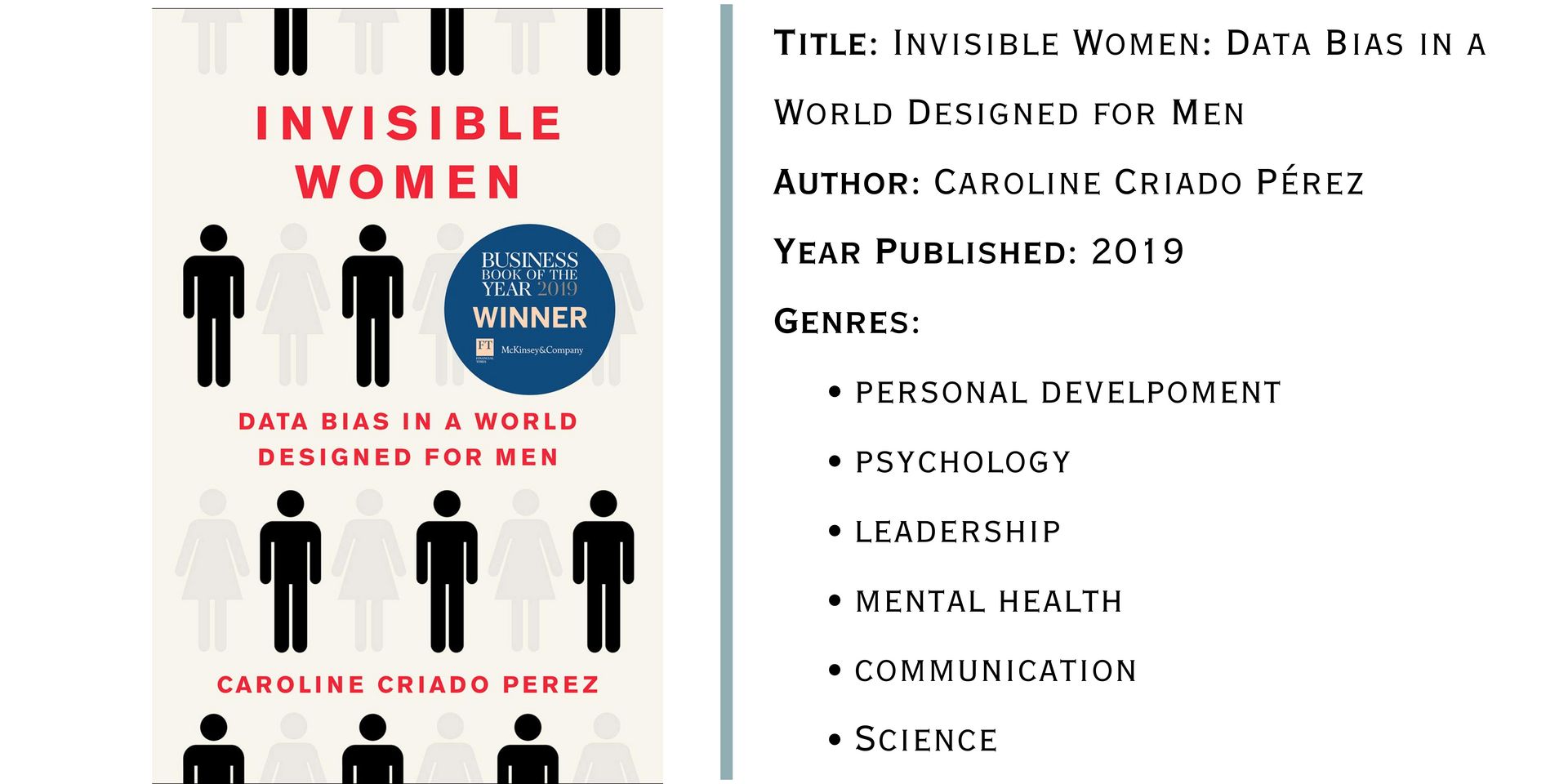
This book may alter how you interpret everyday design and decision-making. You’ll start noticing the subtle ways bias hides in data, algorithms, and “neutral” choices. More than statistics, it’s a call for awareness—and action—to make the world more inclusive for everyone.

Principle #1: What gets measured gets designed
When data doesn’t include women, the results—products, workplaces, and policies—don’t serve them. Pérez calls this the “gender data gap,” and it affects safety, health, and economic opportunity.
Principle #2: The default male perspective isn’t neutral
Many systems were created by and for men, often unintentionally. Acknowledging this isn’t about blame—it’s about understanding how exclusion happens quietly through omission.
Principle #3: Inclusive design benefits everyone
When research, technology, and policy account for diversity, the outcomes become safer, smarter, and more effective for all.

“The world is built for men, and it’s killing women.”
“We are taught that data is objective. But when you forget to collect data on half the population, you aren’t dealing with facts anymore—you’re dealing with bias.”
“When you design for women, you often end up with better results for everyone.”

Question the default. Whether at work or home, pause to ask: who might this process or product unintentionally leave out?
Advocate for better data. Push for representation in surveys, studies, and decision-making. Visibility begins with measurement.
Support inclusive innovation. Choose companies, tools, and policies that prioritize equitable design and testing.

Spend a day noting examples of bias in design or routine experiences—office temperature, phone size, voice recognition accuracy, or even public transport layouts. Reflect on what a more balanced version might look like.ge

Caroline Criado Pérez is a British writer, activist, and campaigner for women’s rights. She first gained attention for her campaign to feature Jane Austen on British currency, then turned her focus to gender bias in data. Invisible Women emerged from years of research and advocacy, blending powerful storytelling with hard evidence. Pérez’s mission is simple yet ambitious: to make women visible in the data that shapes our world.



We hope this week’s reflection encourages you to look closer at the “neutral” systems around you. Inclusion begins when the invisible becomes visible—and that starts with asking better questions about the data shaping our lives.
If you’re enjoying A Book a Week, spread the word by sharing the sign up link with a colleague or friend. We really appreciate the support 🙏
Partner with A Book a Week and reach 700+ readers & professionals' inboxes.
Contact us to learn more.