- A Book a Week
- Posts
- 📙 ‘How to Know a Person’: What It Really Means to Connect
📙 ‘How to Know a Person’: What It Really Means to Connect
A guide to empathy, attention, and the quiet skill of seeing others clearly
This week, we’re focusing on How to Know a Person: The Art of Seeing Others Deeply and Being Deeply Seen by David Brooks.
Brooks explores one of life’s most profound challenges—how to truly understand another human being. In a world obsessed with performance and surface impressions, this book reminds us that the deepest form of intelligence is relational. Let’s dive in.
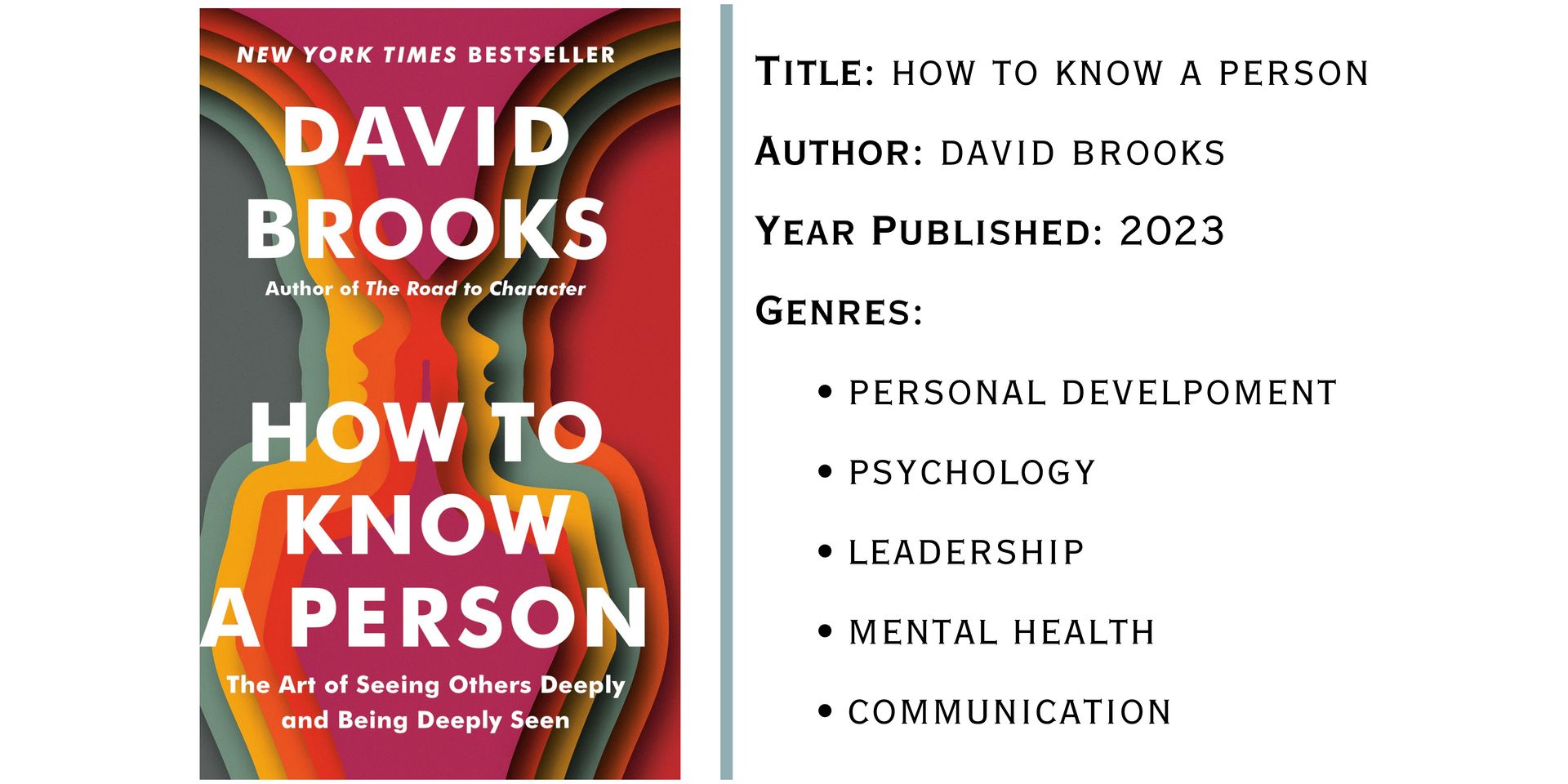
This book encourages you to move beyond small talk and transactional relationships. It offers tools to help you connect more meaningfully, listen with intention, and make others feel genuinely known. Reading it might shift how you engage with everyone—from loved ones to strangers.

Principle #1: Seeing is the beginning of caring.
Brooks reminds us that being “seen” is one of the most powerful human experiences. People who feel unseen often withdraw, act defensively, or lose confidence. But when you genuinely notice someone—their efforts, emotions, or small daily struggles—you offer recognition that can restore dignity. Seeing others clearly isn’t just emotional intelligence; it’s a moral act that builds the kind of empathy every community needs.
Principle #2: Attention is love.
In a world of constant distraction, giving someone your full attention has become rare—and deeply meaningful. Brooks writes that focused listening is one of the purest forms of care because it tells people they matter enough to hold your undivided presence. True attention doesn’t just capture words; it captures tone, silence, and emotion. The next time you listen, do so as if the person across from you carries a story that could teach you something new.
Principle #3: Humility creates connection.
The most insightful people aren’t those who dominate conversations—they’re the ones who approach others with curiosity. Brooks calls this “epistemological humility,” the recognition that you never have the full story. When you suspend assumptions and stay open, others feel safe enough to reveal more of themselves. Genuine connection begins when we trade certainty for curiosity and judgment for wonder.

“To see someone well, you must first quiet your own ego.”
“We all long to be understood before we are fixed.”
“Good conversations are moral acts—they make people feel respected and enlarged.”

Practice “undivided attention.” When someone speaks, set your phone aside, pause your thoughts, and listen fully. You’ll be surprised by what you hear.
Ask better questions. Instead of “How are you?”, try “What’s been on your mind lately?” or “What’s something that’s bringing you joy?”
Reflect back understanding. Paraphrase what someone says to confirm you’ve grasped their meaning—this builds trust and connection.

Choose one person in your life who feels distant or misunderstood. Spend fifteen minutes talking with them without interruption. Focus only on understanding, not responding. Notice how the tone of the relationship changes afterward.

Brooks distinguishes between “Diminishers” and “Illuminators.” Diminishers see others as instruments or problems to be solved. Illuminators approach with wonder, seeking to draw out the depth in others. Most of us move between the two without realizing it. The book’s challenge is simple but profound: become an Illuminator—someone who helps others feel seen, safe, and significant.


We hope this week’s reflection encourages you to slow down, listen more deeply, and make space for the humanity in others. True understanding begins when curiosity replaces judgment.
If you’re enjoying A Book a Week, spread the word by sharing the sign up link with a colleague or friend. We really appreciate the support 🙏
Partner with A Book a Week and reach 800+ readers & professionals' inboxes.
Contact us to learn more.