- A Book a Week
- Posts
- 📘 Conversations on Love: The Truth About Relationships Nobody Teaches
📘 Conversations on Love: The Truth About Relationships Nobody Teaches
Honest lessons on heartbreak, commitment, friendship, and self-love.
Good morning, everyone!
This week, we're focusing on "Conversations on Love" by Natasha Lunn. If you've ever wondered why relationships feel so complicated, fragile, or confusing, this book offers a refreshing truth. Lunn gathers insights from some of the world’s most thoughtful writers and thinkers to explore the realities of love in all its forms: romantic love, friendship, heartbreak, family, and self-worth.
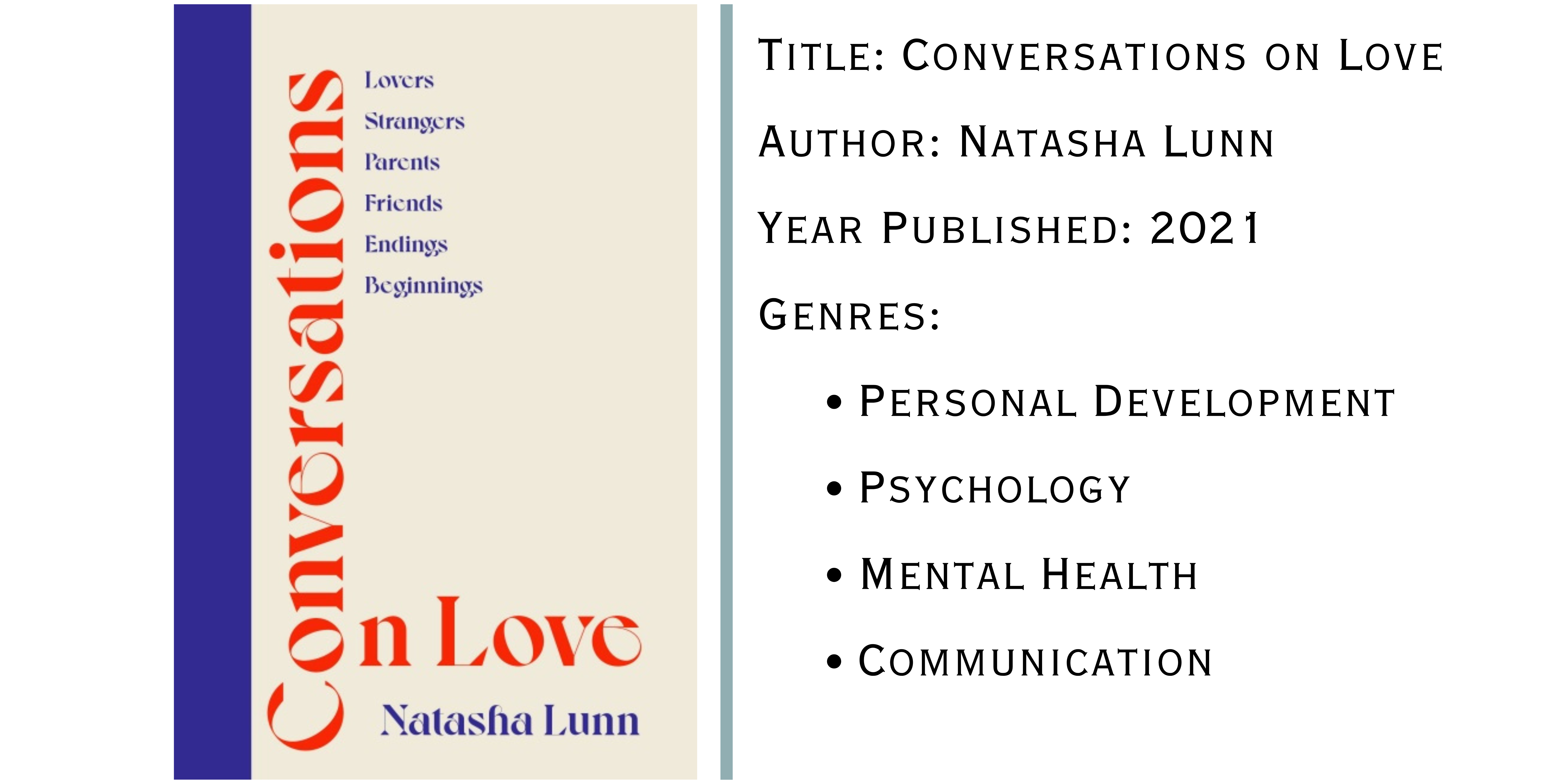
This is not a fairy tale about perfect relationships. It is a compassionate exploration of the messy, beautiful, deeply human experience of loving others.
This book may shift the way you understand love completely. Instead of chasing perfect relationships, you start valuing honest ones. You may learn that heartbreak is not failure. That friendship is often the deepest form of love. That long-term relationships are built on effort, not magic. And perhaps most importantly, you begin to understand that love is not something you find once and keep forever. It is something you build again and again.
Let’s dive in.

Principle #1: Love Is Not One Thing
We often treat love as a single concept, but it takes many forms. Romantic love, friendship, family bonds, and self-love all shape our lives differently. When we only prioritize romantic love, we ignore the many relationships that sustain us. Expanding your definition of love can deepen your sense of connection and fulfillment.
Principle #2: Vulnerability Is the Foundation of Real Connection
Love requires the courage to be seen. Not the polished version of yourself, but the uncertain, flawed, evolving version. Many relationships fail not because love disappears, but because people stop being emotionally honest with each other.
True connection happens when two people allow themselves to be known.
Principle #3: Heartbreak Is Part of the Human Experience
Society teaches us to see heartbreak as something to avoid. But heartbreak is often proof that we dared to love deeply. The pain of loss, rejection, or separation teaches us resilience, empathy, and emotional maturity.
Growth rarely happens without emotional risk.
Principle #4: Heartbreak Is Part of the Human Experience
We often believe love should feel effortless if it is meant to be. The reality is different. Long-lasting relationships require communication, patience, compromise, and continued curiosity about the other person.
Love survives not through perfection, but through effort.
Principle #5: Heartbreak Is Part of the Human Experience
Romantic love often receives the spotlight, but friendships are frequently the relationships that sustain us across decades. They offer stability, emotional support, and shared history.
Strong friendships are not secondary relationships. They are central to a meaningful life.

“Love is not a destination. It is a practice.”
“Heartbreak does not mean we failed. It means we cared.”
“The strongest relationships are not the ones without conflict, but the ones where people keep choosing each other.”

Have One Honest Conversation This Week
Think about a relationship in your life where something important has gone unsaid. It might feel uncomfortable, but honest conversations strengthen relationships more than silent assumptions ever will.
Invest in Your Friendships
Schedule time for the people who consistently support you. Friendship is not the background of life. It is one of the most powerful forms of love we experience.
Reframe Your Past Heartbreak
Instead of viewing past relationships as failures, ask yourself what they taught you. Every relationship leaves behind lessons that shape how you love in the future.

This week, write down the five most important relationships in your life.
Next to each name, ask yourself one simple question:
"What have I done recently to nurture this relationship?"
If the answer is “not much,” this is your opportunity to change that. Send a message. Make a call. Express appreciation.
Love grows where attention goes.

🔍 Deep Dive Topic: Why We Misunderstand Love
Nobody tells you when you're growing up watching rom-coms and scrolling through perfectly curated couple photos that you're being quietly lied to about what love actually is.
One of the most powerful threads running through Conversations on Love is Natasha Lunn's honesty about this exact problem. After years of feeling like love was always just out of reach, she began asking a harder question: what if the problem isn't me, but the story I've been told about what love is supposed to look like?
The fantasy we've been sold
Our earliest ideas about love come from stories that tend to tell the same tale: love arrives dramatically, feels electric and certain, and once you find "the one," the hard part is over. Esther Perel, one of the voices Lunn brings into the conversation, speaks directly to the danger of this. The fantasy doesn't just set us up for disappointment. It trains us to misread the signals that real, lasting love actually sends.
Because real love often arrives quietly. Philippa Perry's insight is striking: the most fulfilling relationships evolve slowly, moving from initial intensity to something deeper and more intricate. That slower burn doesn't look like the movies. So we mistake it for something less than it is.
What it actually takes
Every relationship reaches a point where the initial high fades and real effort is required. For many people, this is the moment they panic and start questioning everything. Lunn's book is a gentle but firm answer: you probably didn't choose wrong. You just weren't taught that this ordinary, difficult, imperfect moment is exactly where real love lives.
Roxane Gay puts it well, noting that matured love develops through patience, humor, acknowledging imperfections, and resolving conflict while maintaining fundamental stability. That's not a consolation prize. That's the real thing.
The relationships that last are built and chosen deliberately, over and over again. Before you decide something is broken, ask yourself: am I comparing my real relationship to a fictional one?
That question alone might save you from walking away from something worth staying for.



Love is rarely what we imagined it would be, and that is not a disappointment but an invitation to understand it more deeply. We hope this week's edition leaves you a little more patient with your relationships, and a little more honest about the stories you have been told to expect.
As always, if you have any feedback or questions, just hit reply.
A Book a Week Team
If you’re enjoying A Book a Week, spread the word by sharing the sign up link with a colleague or friend. We really appreciate the support 🙏
Partner with A Book a Week and reach 700+ readers & professionals' inboxes.
Contact us to learn more.